

Currently Empty: $0.00



🔧 Engine Management System – Introductory Training Course
Target Audience: Newly graduated automotive engineers working at service centers
Course Duration: [e.g., 2 days / 10–12 hours]
Delivery Method: [e.g., Classroom / Online / Blended]
Course Summary:
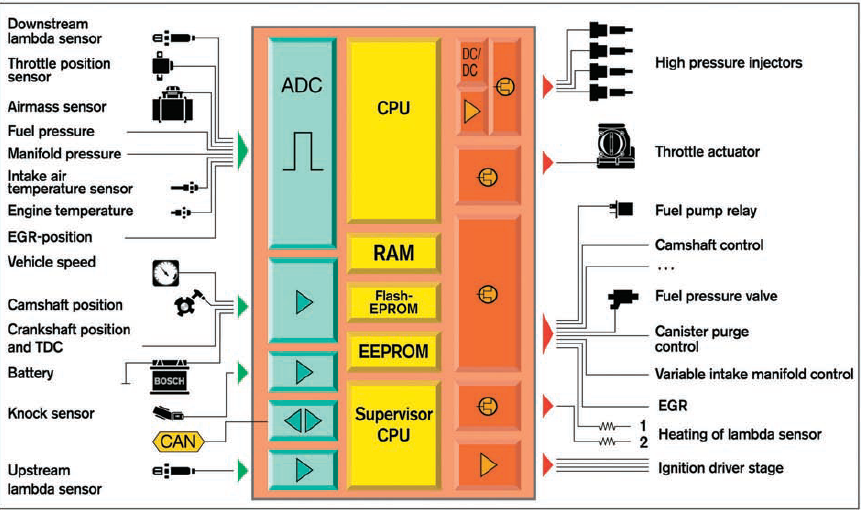
This training course introduces newly graduated automotive engineers to the fundamentals of modern Engine Management Systems (EMS). It focuses on the structure, purpose, and operation of the Engine Control Module (ECM), key sensors and actuators, and the basics of diagnostic procedures using scan tools.
The course aims to bridge the knowledge gap between academic study and practical workshop application. Engineers will gain essential understanding to analyze engine performance, interpret diagnostic codes, and communicate faults effectively in a service center environment.
Key Learning Objectives:
-
Understand the role and structure of the Engine Control Module (ECM)
-
Identify the main engine sensors (e.g., oxygen, crankshaft, MAP, MAF) and understand their functions
-
Understand how actuators (e.g., fuel injectors, ignition coils) are controlled by the ECM
-
Learn the basics of fuel injection, ignition, and emissions control
-
Use diagnostic scanners to read DTCs (Diagnostic Trouble Codes), view live data, and reset faults
-
Apply structured diagnostic thinking when resolving engine-related complaints
Course Modules:
-
Introduction to Engine Management Systems (EMS)
-
ECM Functions and Internal Architecture
-
Sensors: Types, Functions, and Signals
-
Actuators: Types and Control Strategies
-
Fuel Injection and Ignition Control Basics
-
Emission Control and OBD Systems
-
Diagnostic Tools: Types, Functions, and Operation
-
Reading and Interpreting DTCs
-
Live Data Analysis and Basic Troubleshooting
-
Case Study: Real-World Diagnosis Using a Scan Tool
Outcome:
By the end of this course, participants will understand how the engine management system works as a whole. They will be able to recognize and explain EMS components, use diagnostic tools effectively, and take the first steps toward accurate troubleshooting in engine-related service jobs.
Student Ratings & Reviews

No Review Yet
 Lessons: